Everyone has left the call and the newest person on the team is still sitting in front of the screen. The write-up arrives the following morning, ordered exactly as the conversation happened, and finding what was actually decided takes a minute of scanning.
You did the same thing when you joined, so you have kept the practice going. Whether it is genuinely for their benefit is a harder question to answer.
People in their twenties spend 8.46 hours a week on this
About 320 hours a year
| Measure | Figure |
|---|---|
| Time spent on minutes (weekly average) | 6.13 hours |
| Annualised | 319.6 hours |
| Say the work is a burden | 67.2% |
| Time spent by people in their twenties (weekly) | 8.46 hours |
| Would like to use a tool for it | 72.6% |
| Actually use one | 1.4% |
How you spend a fifth of someone's first years is a development decision. Very few teams have made it deliberately.
Where the 2.5 hours goes
72.6% want a tool, 1.4% use one
The last two rows are the interesting ones. Nearly three quarters want to use something, and almost nobody does.
How much of "taking minutes teaches you the business" is true?
The case for it is real
Worth stating the argument properly before taking it apart.
This is correct. Trying to write a meeting up forces you to look up the words you let wash over you and to rebuild the structure of the discussion yourself. Sitting in the room does not do that.
The learning lives in the judgement
So where in the process does that effect actually come from?
| Step | Typical time | Development value |
|---|---|---|
| Taking notes during the meeting | ~30 min | Medium. Choosing what to write is a judgement |
| Transcribing the recording | 60 to 70 min | Almost none. Listening and typing |
| Organising key points, extracting decisions | The remainder | High. This is the judgement itself |
| Formatting and submitting | Tens of minutes | Low. Document handling |
The 60 to 70 minutes of transcription teaches close to nothing, because typing what you hear involves no decisions. That distinction is the whole question.
Separate them and only the burden leaves
The development effect survives, and more than half of those 8.46 hours comes back. That time goes into talking to customers, building things, owning a piece of work.
Removing the note taker does not remove the record
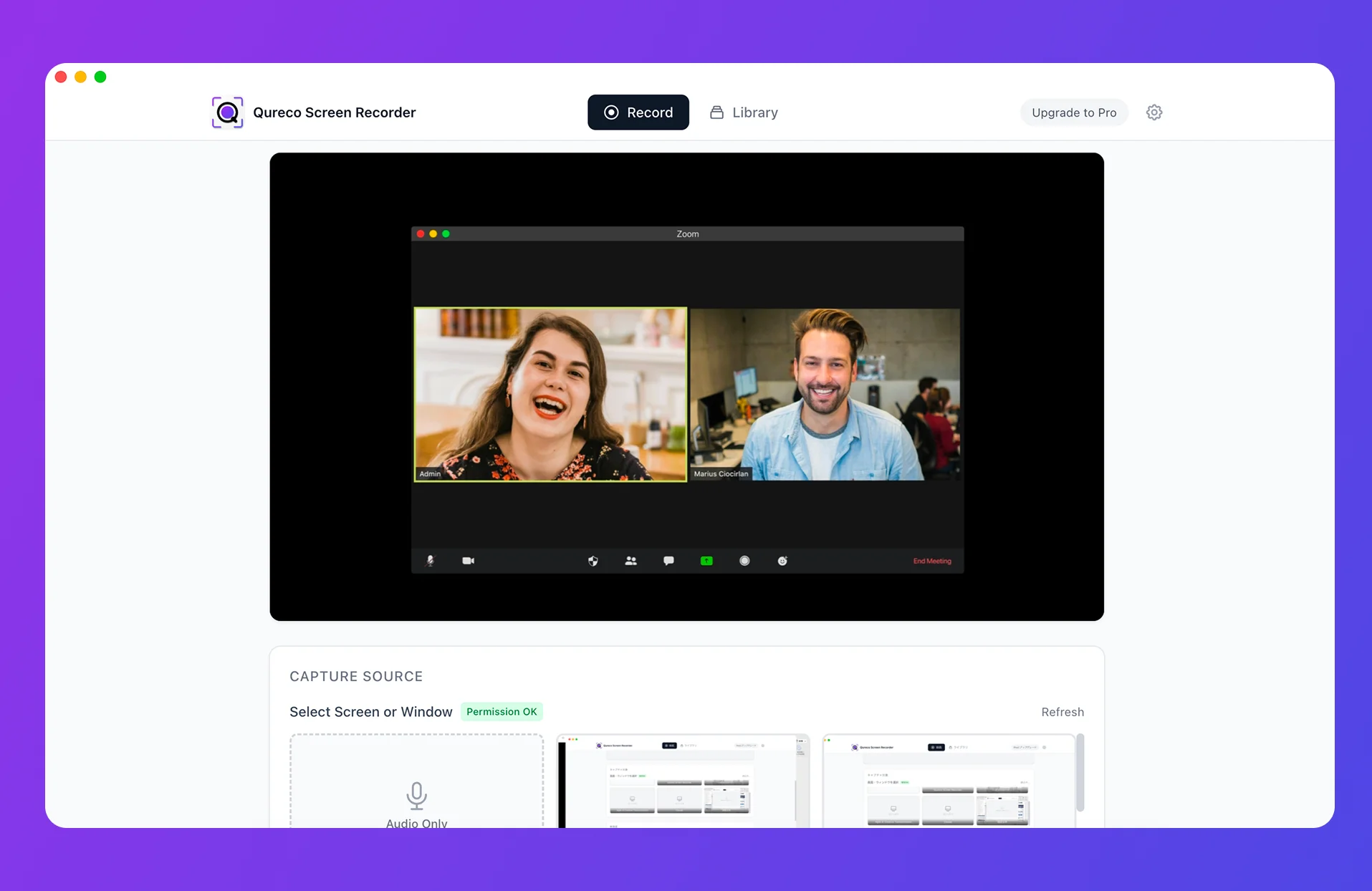
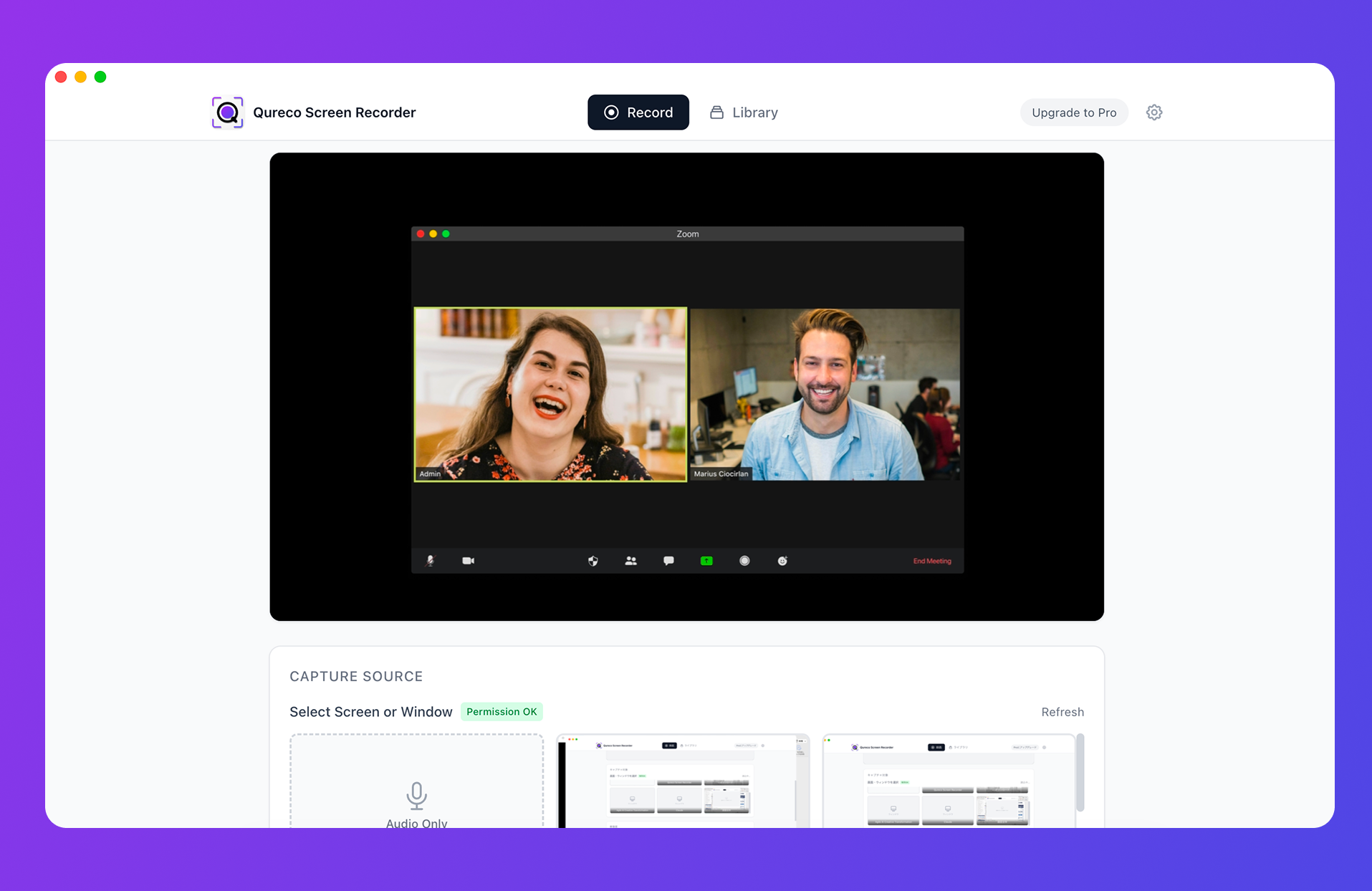
For replacing the record itself, try QurecoQureco records your Mac's screen and generates AI meeting notes from the recording. No bot joins the call, so all anyone hears is "I am recording this." Recording is free, with no time limit and no watermark.
Nissan dropped minutes and hands out photographs instead
Recording and automatic transcription now play the same role
The same structure transfers directly to online meetings. A recording, like the photograph of the sheet, admits no interpretation. It is the original you go back to when two people remember a commitment differently.
Run an AI summary over it and you also get the readable version. The only human step is a few minutes of checking that summary.
What the junior person keeps: three lines
With the record handled, the junior person keeps only the judgement. The deliverable is three lines:
- What was decided (including anything explicitly not decided)
- Who does what next, by when
- Which questions carried over
Those three lines are harder than a transcript. Picking the three things that matter out of an hour requires understanding the whole shape of the discussion. Whatever you were hoping to develop lives here, more concentrated than before.
Three steps to change it at next week's standing meeting
No organisation-wide rollout required. One meeting is enough.
1. Pick exactly one meeting
2. Tell the attendees first
Do not start recording quietly. One sentence at the top of the call:
"From today we are keeping a recording instead of written minutes. The transcript is handled automatically, and what gets circulated is the decisions. The recording sits somewhere only the team can open."
3. Change the deliverable to three lines
Say explicitly that the transcript is no longer needed. Change the process without saying so and people produce both, which is more work than before, not less.
| Before | After | |
|---|---|---|
| During the meeting | Focused on capturing everything | Taking part in the discussion |
| After the meeting | Replaying audio to transcribe (60 to 70 min) | Save the recording, AI summarises |
| Deliverable | A near-verbatim account | Three lines: decisions and actions |
| Junior workload | 8.46 hours a week | About 10 minutes per meeting |
| Source of truth | Someone's notes and memory | The recording |
Things you are probably wondering about
A few things tend to come up once you actually try to change this. Here are the ones worth talking through first.
This is the most common worry, and a fair one. The development comes from the judgement step, so keeping that keeps the effect. Picking three things out of an hour asks for more prioritisation than a full write-up, not less, and reading those three lines still tells you how much the person understood.
Usually this goes the other way. A long chronological account is the version nobody opens. Three lines get read, and anyone who wants the detail can go back to the recording, so nothing is really lost.
No, it does not have to. Start with recurring internal meetings and project calls, then extend only where it worked. Recordings do pile up, so setting a retention period early makes the whole thing easier to live with.
If they have a required format, use it. Even then the transcription step still goes: you reshape the generated summary into their template. Starting from a summary rather than from a blank page is a different order of work.
You can go back. That is the reason for trying it on a single meeting: if it does not suit the team, the next one returns to written minutes and nothing has been lost.
Wrapping up
- Meeting minutes take 6.13 hours a week on average, 319.6 hours a year. For people in their twenties it is 8.46 hours a week, roughly 440 hours a year
- A one-hour meeting generates about 2.5 hours of write-up work, of which 60 to 70 minutes is transcription
- "Writing minutes teaches you the business" is true, but the teaching happens in deciding what matters, not in transcribing
- Nissan dropped minutes entirely and distributes photographs of the discussion sheet. They replaced the record with one nobody can reinterpret
- Moving across takes three steps: pick one meeting, tell the attendees, change the deliverable to three lines
Pick one recurring meeting next week and say the sentence at the top of the call. It reverses easily if it does not work, though the first thing you are likely to notice is your junior colleague looking up and joining the conversation.

Qureco Screen Recorder
Powerful screen recording app for Mac
Record meetings, let AI handle the notes, just read what arrives in Notion.
Try all features free for the first two weeks.